Healthy, meaningful relationships are an important part of life. Whether it is a friendship, family relationship, or romantic relationship, the people in our lives should help us feel respected, supported, and safe. October is Domestic Violence Awareness Month, an opportunity to raise awareness about unhealthy and abusive relationships and help people recognize the difference between healthy and harmful behaviors.
We asked Lena Pope family therapist Breanna Gammon, LCSW, to share some signs of healthy and unhealthy relationships and ways we can help create a culture where everyone feels safe and respected.
Trust your gut
There is science behind listening to your gut. If something feels off, it is worth paying attention to that feeling.
An unhealthy relationship may involve someone who regularly puts you down, talks over you, controls what you do, or makes you feel like you cannot be yourself. It can also include jealousy, intimidation, explosive anger, or attempts to isolate you from friends, family, or activities you enjoy.
“Sometimes we notice a change in someone’s behavior before we understand what is causing it,” Gammon says. “If someone suddenly stops spending time with friends, gives up activities they enjoy, or seems afraid of upsetting their partner, those can be signs that something isn’t right.”
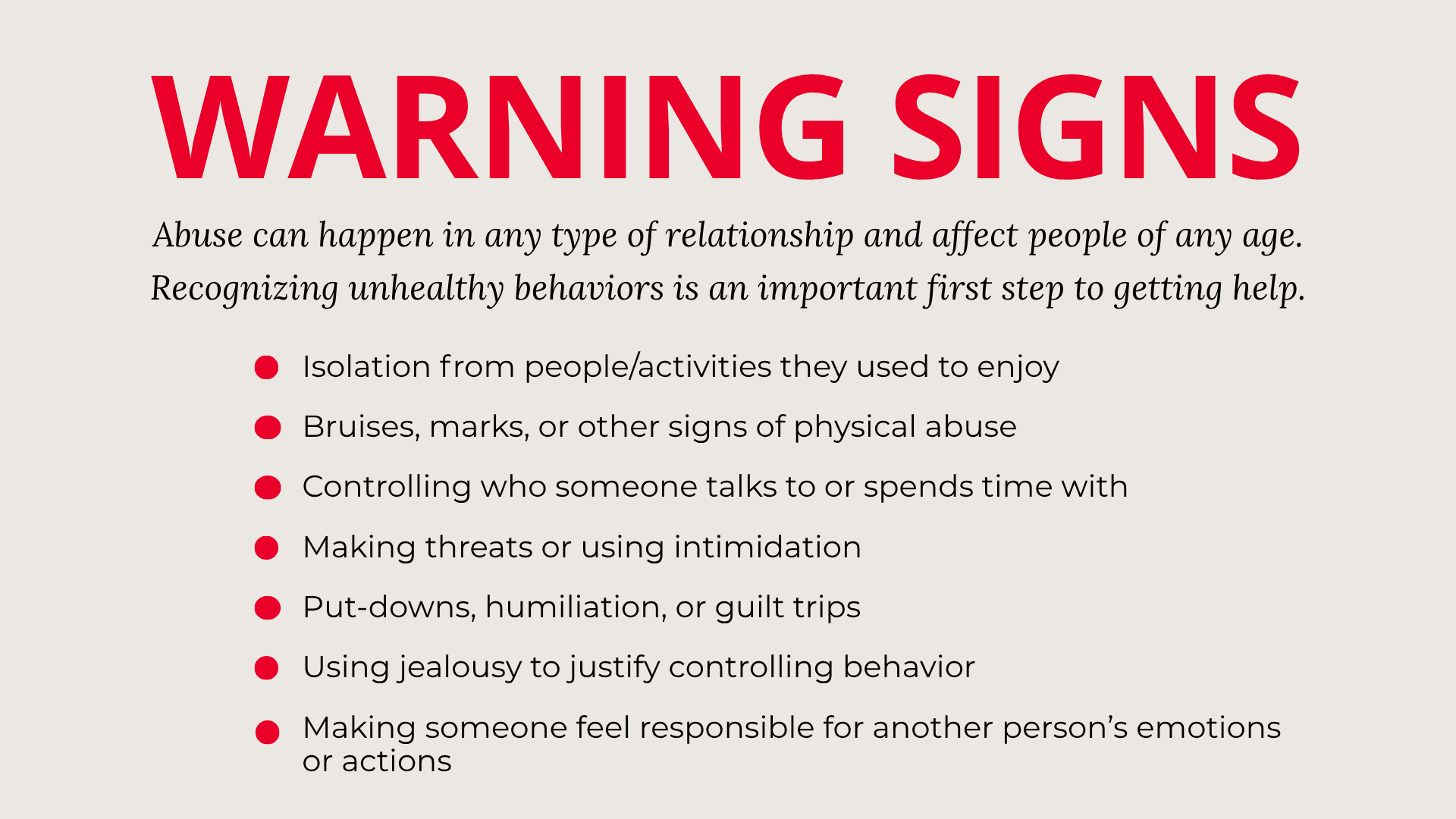
Other warning signs can include:
- Isolation from people/activities they used to enjoy
- Bruises, marks, or other signs of physical abuse
- Controlling who someone talks to or spends time with
- Making threats or using intimidation
- Put-downs, humiliation, or guilt trips
- Blaming someone else for abusive behavior
- Using jealousy to justify controlling behavior
- Making someone feel responsible for another person’s emotions or actions
Abuse can happen in any type of relationship and can affect people of any age. Recognizing unhealthy behaviors is an important first step toward getting help.
What does a healthy relationship look like?
Healthy relationships are built on mutual respect. Both people should feel comfortable expressing their thoughts and feelings, making decisions, and maintaining relationships and activities outside of the relationship.
In a healthy relationship, people:
- Listen to and value each other’s opinions
- Respect boundaries and personal space
- Take responsibility for their actions
- Can admit when they are wrong
- Are willing to compromise
- Support each other’s goals and interests
- Respect each other’s right to have friends, activities, and feelings
Healthy relationships do not mean that people never disagree. Conflict is a normal part of relationships. What matters is how people handle that conflict. A healthy relationship allows both people to have a voice, even when they disagree.
Keep communication open
One of the best ways to help prevent unhealthy relationships is to start talking about them early and keep the conversation going. Parents and caregivers can talk with children about what respect looks like in friendships, family relationships, and romantic relationships. They can point out healthy behaviors when they see them and talk about unhealthy behaviors when they encounter them. Creating an open and supportive environment makes it easier for someone to speak up when something doesn’t feel right.
And remember, these conversations do not have to be perfect. “We’re all human, which means we don’t always get it right,” Gammon says. “It’s okay to tell your child you didn’t handle a situation the way you would have liked. Ask to redo the conversation. Give your child that same opportunity when they need a redo.”
Healthy relationships are about safety and respect
Whether we are talking about a child and a parent, two friends, or romantic partners, everyone deserves relationships where they feel valued, heard, and safe.
This Domestic Violence Awareness Month, we can all help by learning the signs of healthy and unhealthy relationships, talking openly about boundaries and respect, and reminding the people in our lives that they do not have to face difficult situations alone.
If you or someone you know is experiencing an unhealthy or abusive relationship, help is available. Reaching out to a trusted person or professional can be an important first step.
Resources
- Lena Pope’s Healthy Boundaries – For youth ages 10–17. Call 817.255.2652 for an assessment.
- Love Is Respect – Provides information and support for young people experiencing unhealthy or abusive relationships.
- The Archway– Provides services and support for individuals and families experiencing domestic violence.
- Texas Advocacy Project– Provides legal and support services for people experiencing relationship and domestic violence.
- The Women’s Center of Tarrant County – Provides counseling, support, and resources for individuals and families.