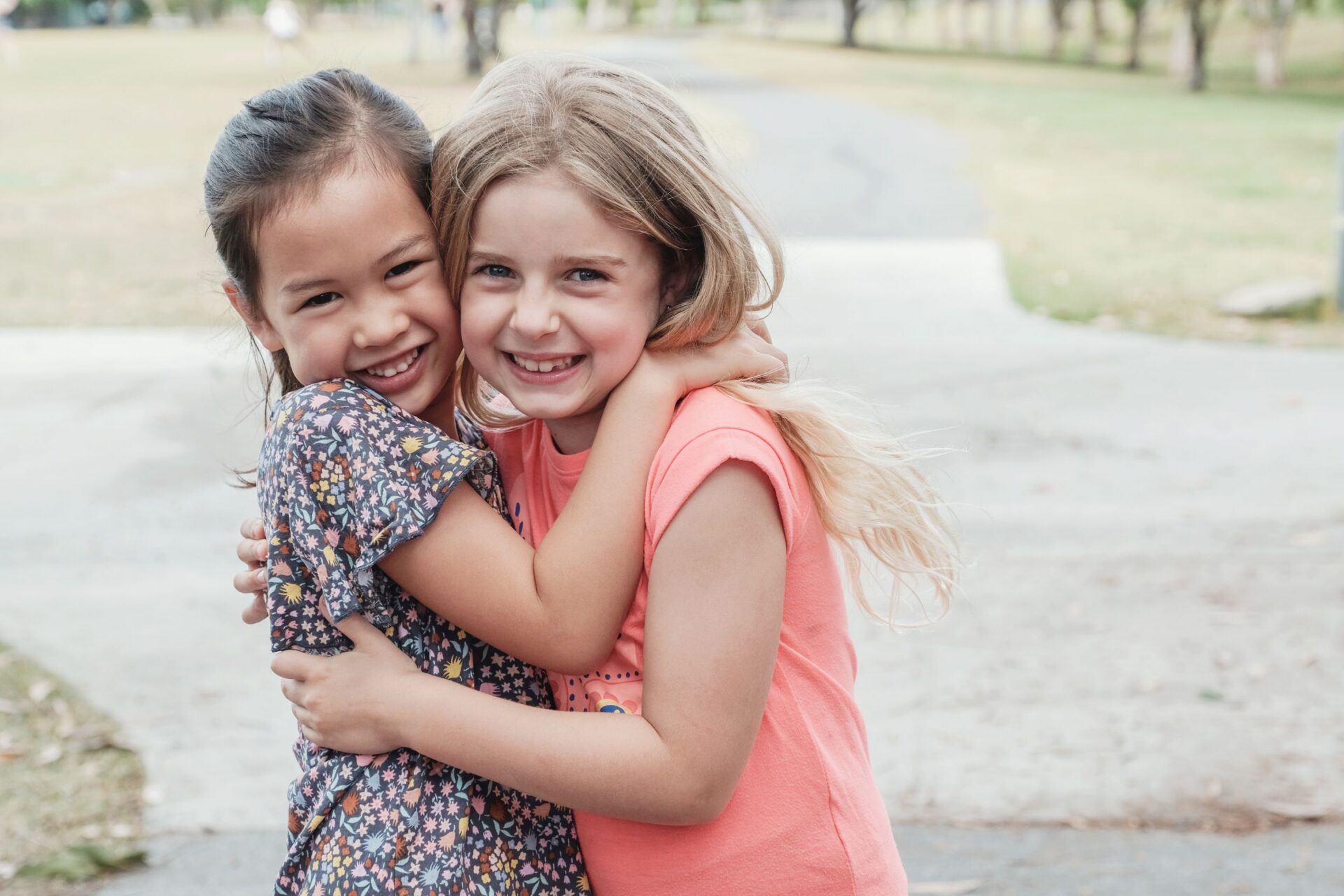
A good friendship should bring you up more than it brings you down.
Friendships are an important part of growing up. They give children and teens opportunities to laugh, learn, work through disagreements, and feel connected. Learning how to build healthy friendships is a skill that develops over time.
During Suicide Prevention Month, we are reminded that connection matters. Having even one safe person to talk to can make a meaningful difference when someone is struggling.
We asked Lena Pope therapist Elizabeth Brown, LPC – Supervisor, what parents and caregivers can teach children about building healthy friendships and being there for someone who may be having a hard day.
A good friend respects you
A healthy friendship should feel safe, supportive, and respectful. A safe friend can handle a disagreement and hear you say “no” without becoming angry or making you feel guilty. Maybe you do not want to lend them your jewelry or play the game they suggested. They will still respect your boundaries, listen to you, and will not put you down, control you, or demand all of your time and attention.
“A safe friend won’t make your bad days worse,” Brown says. “They encourage and support you. They show you respect and listen.”
Trust takes time
Trust is built over time. Children can start by sharing something small and personal and paying attention to how the other person responds. Do they keep the information private? Do they respond with kindness? Do they share and listen in return?
“Trust is kind of like a dance, and built by ‘I give a little, you give a little’,” Brown explains.
Healthy friendships have balance. Both people should have opportunities to give and receive support. For example, if a friend expects you to drop everything whenever they are stressed but is never available when you need support, that may be a sign that the friendship is not as balanced as it should be. Children should also be cautious around someone who regularly shares other people’s secrets. If they share someone else’s private information, they may not keep your information safe either.
A good friend listens
Being a good friend does not mean having all the answers. When someone is struggling, children do not need to solve their friend’s problems. Sometimes the most helpful thing they can do is listen.
Simple words can go a long way: “I’m glad you told me.” “That sounds really hard.” Or, “I don’t completely understand, but I’m glad you told me.”
Children can also learn that they do not have to have one perfect friend who does everything with them. One friend may make them laugh, another may give good advice, and another may be a great listener. What matters is having safe, authentic connections with people who know and care about them. Real friendship is about more than what we see on social media.
A picture of a group of friends together does not tell us whether those people feel safe with one another, whether they listen to each other, or whether they are there for each other when life gets difficult. Real connection happens beyond the picture.
Children and teens do not need a huge friend group to feel connected. Even a few caring relationships can help someone feel known, supported, and valued. Positive relationships and a sense of connection are important protective factors in suicide prevention.
A good friend puts safety first
If a friend shares that they are struggling, getting hurt, or may not be safe, children should know they do not have to handle it alone. A good friend puts safety before keeping a secret. They can tell a trusted adult, such as a parent, teacher, counselor, coach, or another adult who can help. It can feel scary to tell an adult, especially if a child worries their friend will be angry. But getting help is an important way to care for someone.
This Suicide Prevention Month, we can all help children understand that they do not have to go through difficult things alone. We can teach children how to recognize a safe friend and how to be one. They do not need the perfect words. They can listen. They can care. They can speak up. And they can help connect a friend with an adult who can provide support.
Sometimes, being a good friend starts with something as simple as saying, “I’m glad you told me.”
If you or someone you know is struggling or needs someone to talk to, the 988 Suicide & Crisis Lifeline is available 24/7 by call or text at 988, or through online chat.